Healthcare 24/7

Harnesses the power of virtual and digital healthcare to enable care anywhere and collaboration everywhere through a suite of modular solutions that can stand alone or be integrated together into an end-to-end healthcare journey.
Understanding Our Users

This platform was designed for two main user groups:

Patient:
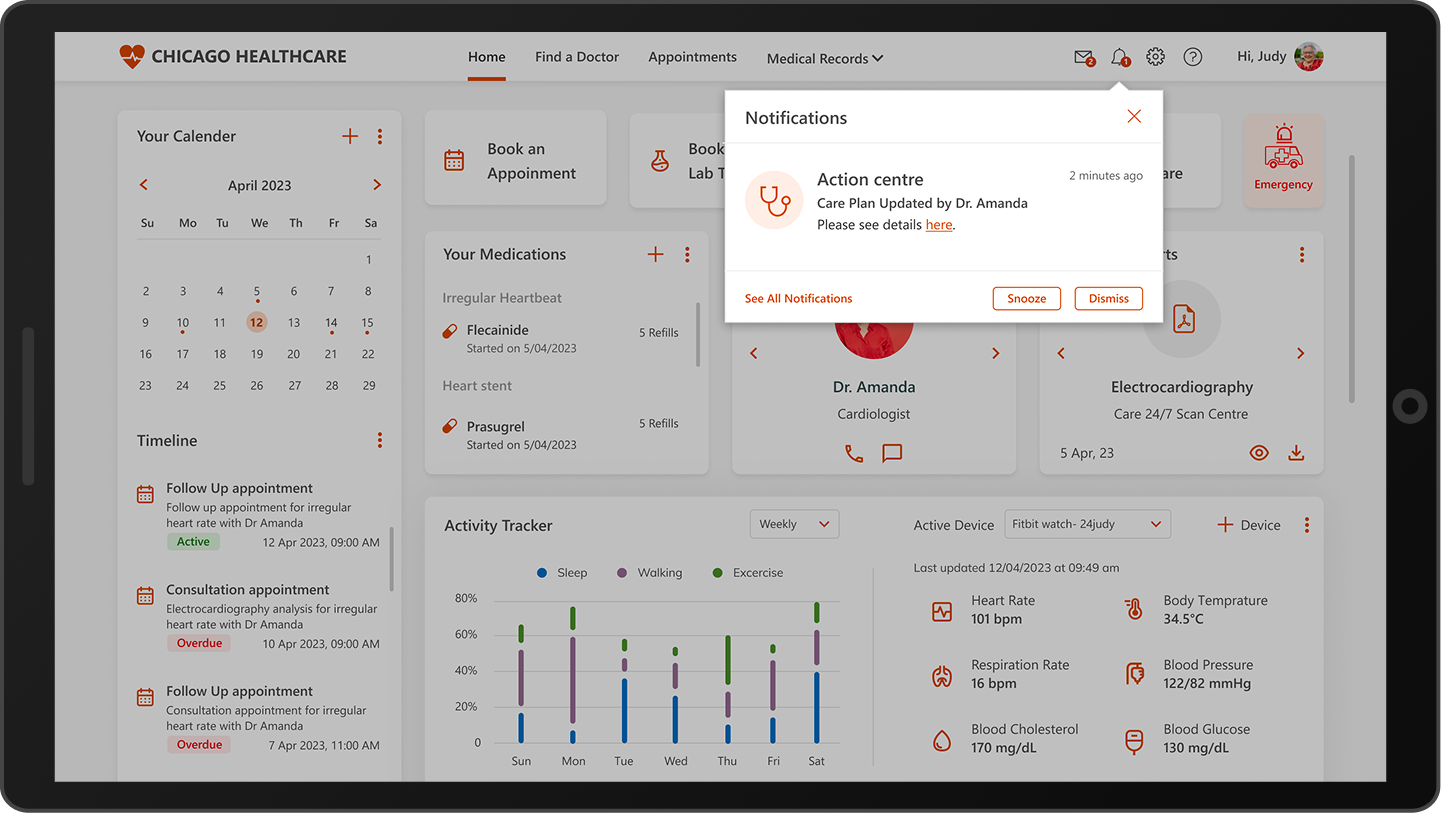
Judy, 74, lives alone and manages multiple chronic conditions, including diabetes, heart disease, and COPD.

Her goal is to maintain independence while staying on top of her health and avoiding hospital visits.

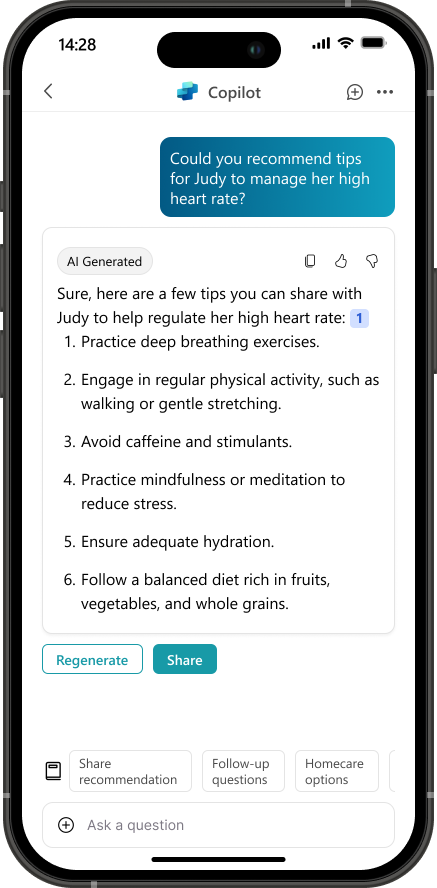
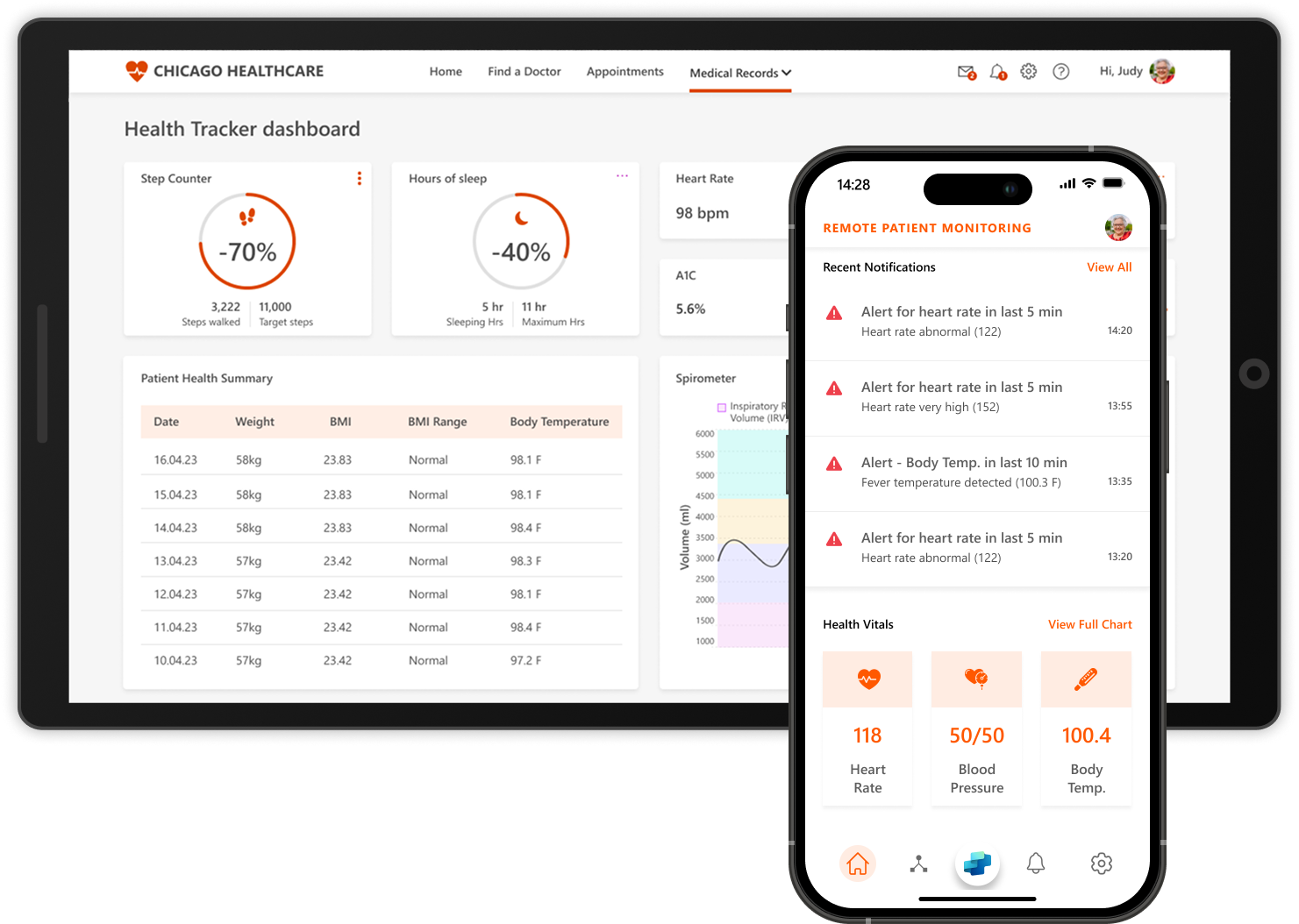
She needs reliable, easy-to-use monitoring tools and timely, actionable guidance when issues arise. However, unexpected symptoms like irregular heart rates create anxiety, and she depends on proactive alerts to know when to seek care.
Care Team:
The Care Team is a multidisciplinary group supporting ongoing care, including a doctors, nurses, and hospital administrators.

Their goal is to deliver coordinated, high-quality care that improves outcomes and reduces risk.

They need timely access to patient data, clear communication across roles, and efficient workflows to make informed decisions. However, fragmented systems and misaligned processes can create delays, limit visibility, and impact both care delivery and operational efficiency.
Understanding the Problem
How to transform the healthcare experience for both patients and clinicians by improving care delivery, enhancing operational efficiency, and reducing clinician burnout—using digital tools, data interoperability, and personalized services.

Core dimensions:
Clinician well-being and efficiency – combating burnout and improving workflows.
Patient experience and expectations – meeting growing demands for personalized, accessible care.
Data integration and insights – enabling smarter, more connected care through interoperable systems and advanced analytics.

Design Approach

Healthcare experience design & systems transformation:
Redefined complex healthcare workflows into intuitive, accessible experiences, improving usability, reducing errors, and accelerating task completion for patients and clinicians.
Reduced clinician burnout by streamlining workflows and introducing AI-powered tools that minimized repetitive administrative work and improved care focus.
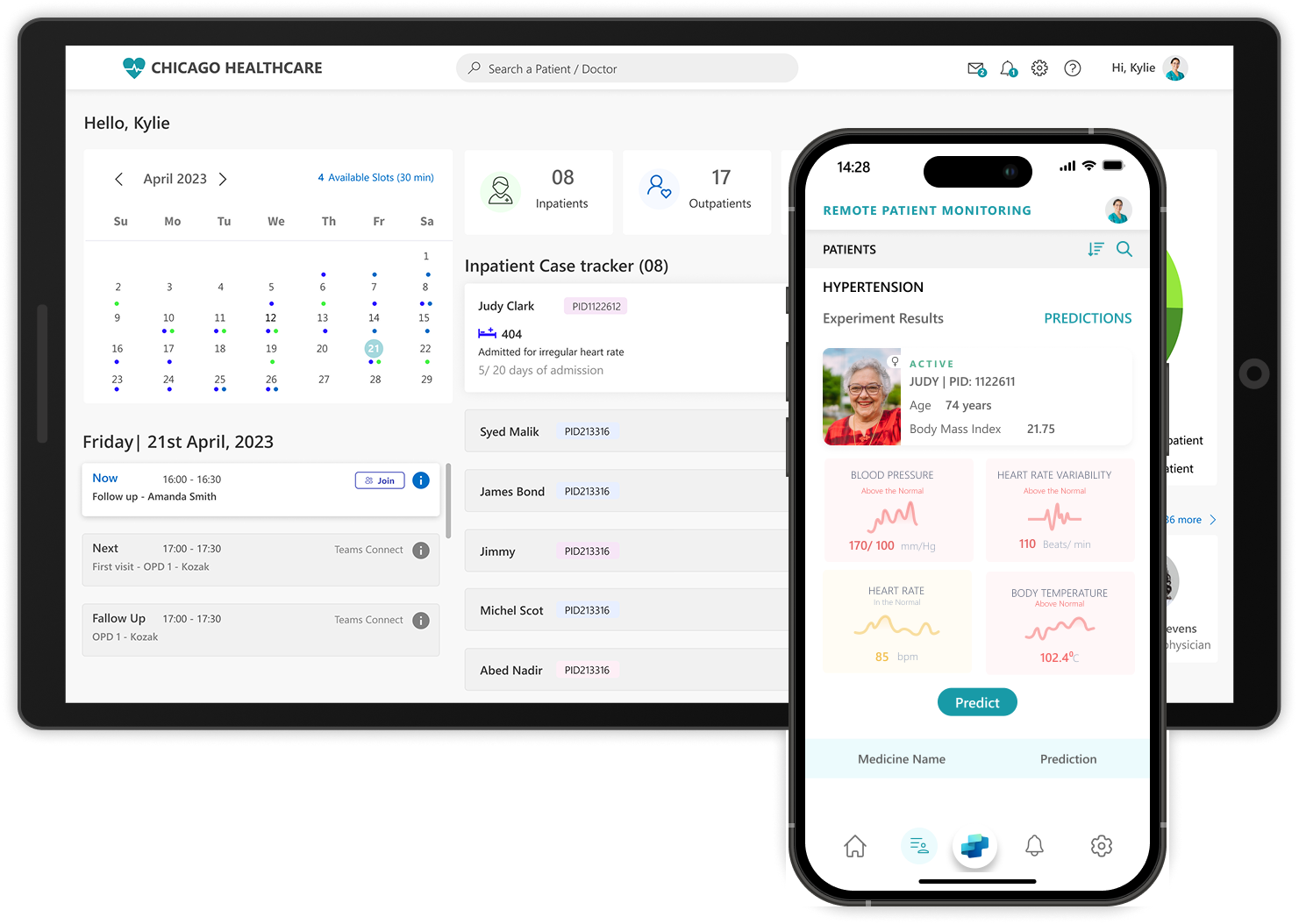
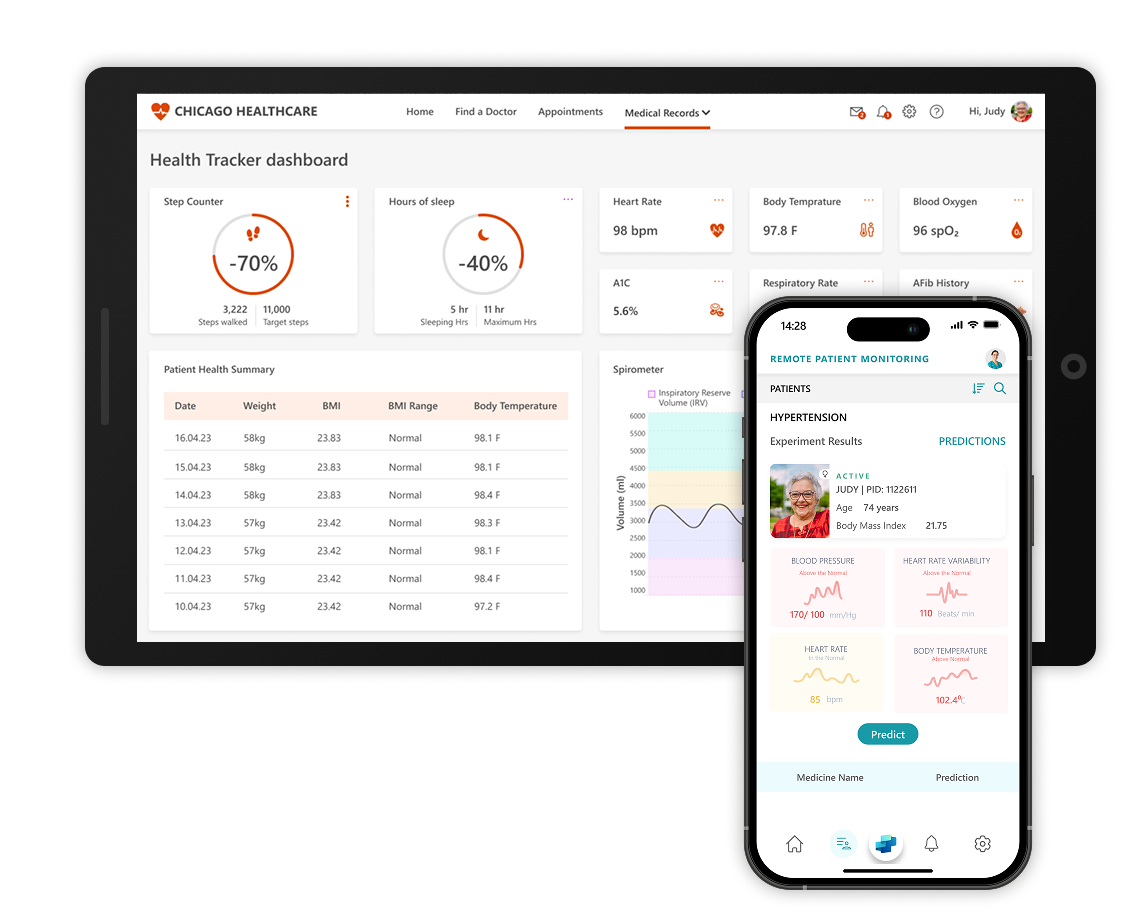
Designed EMR-integrated dashboards with clear data visualization to support faster clinical decision-making and strengthen real-time care coordination.
Built and governed a scalable modular design system, extending consistent design patterns across telehealth, remote monitoring, and home health experiences to ensure seamless care delivery.

Designed for Patient

A unified experience across multiple devices and view points.

Designed for Provider

A unified experience across multiple devices and view points.

Designed for AI Assistant

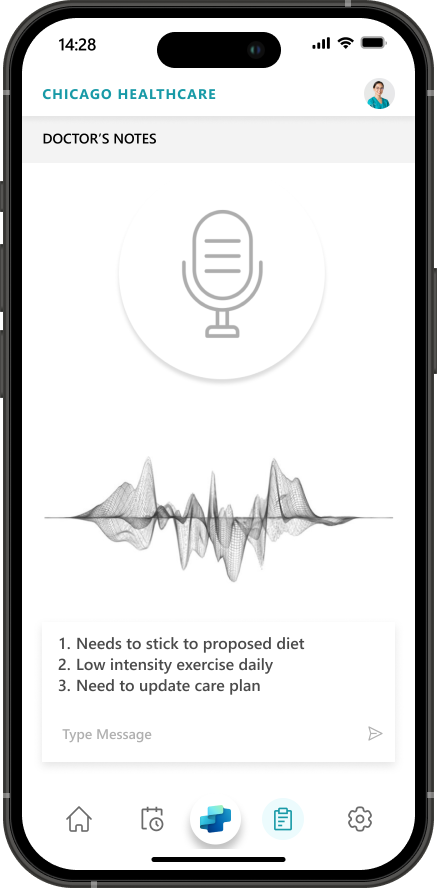
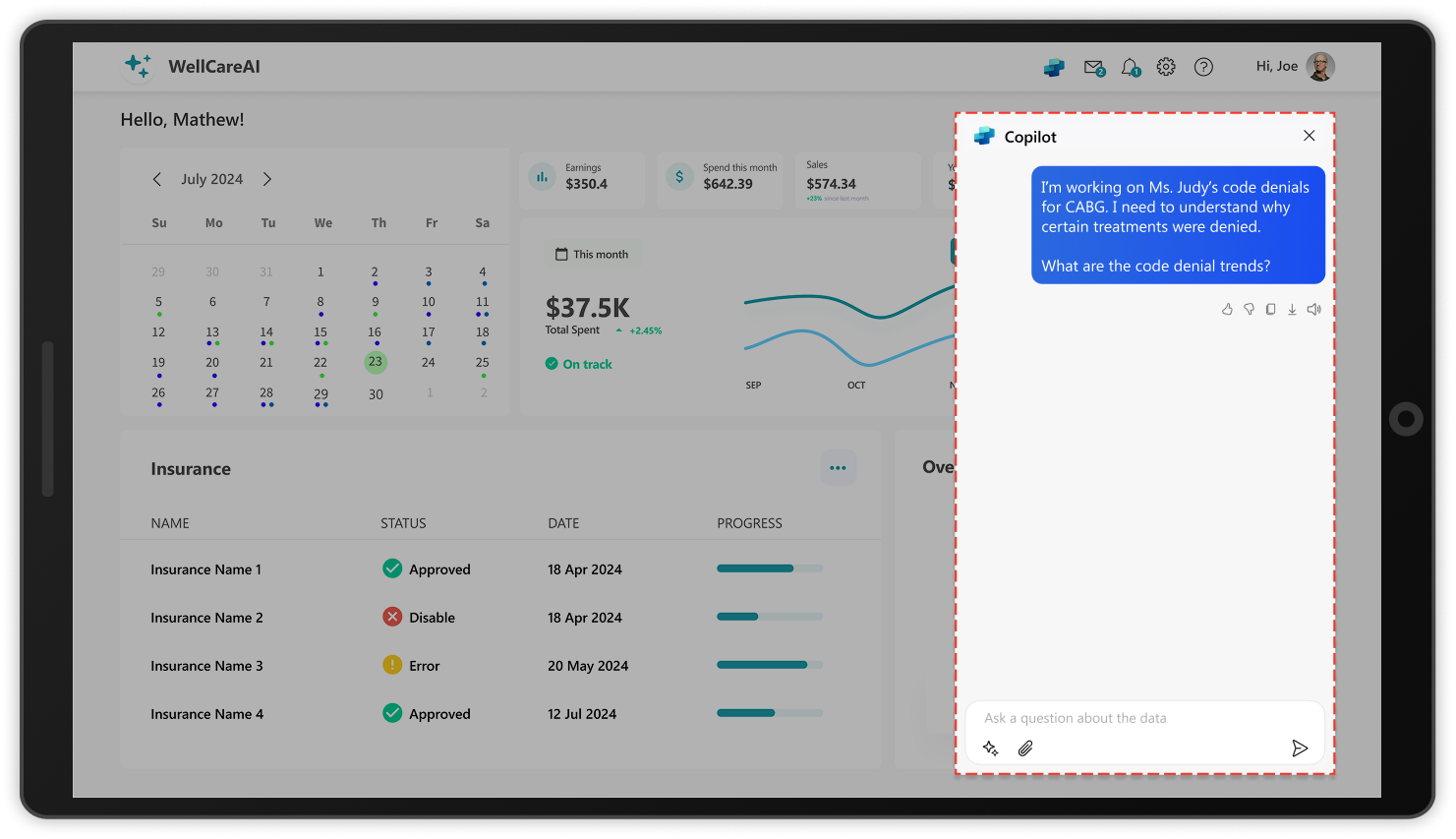
Designs include DAX Copilot, an AI assistant for automated clinical documentation, transcribes the conversation into EMR clinical notes.

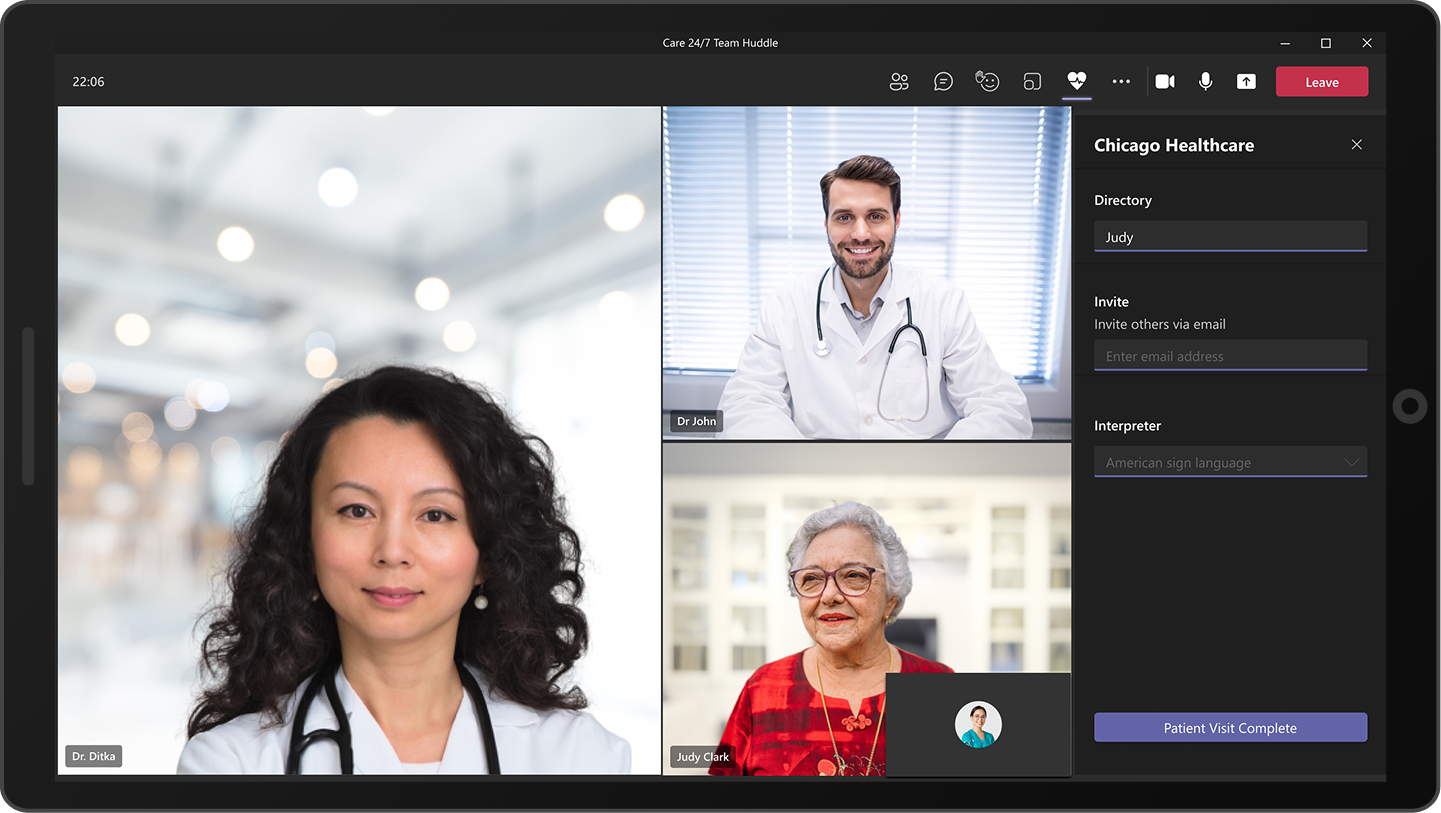
Designed for Connection

Delivered as SaaS experiences through Microsoft Teams enables care teams to remotely collaborate on patient recovery and care planning within a flexible, shared workflow. Patient Virtual Visits provides a seamless, design-led video and audio interface for conducting accessible, high-quality virtual consultations.
Our Results
We designed a unified, human-centered healthcare platform that simplifies complex workflows by integrating virtual care, real-time collaboration, and data-driven insights into a seamless experience. The solution improves usability and decision-making through a cohesive interface and AI-powered support, helping clinicians work more efficiently and deliver better patient care.

Overall, Healthcare 24/7 demonstrates how UX design drives measurable impact by streamlining operations, improving outcomes, and increasing system-wide agility.

Other Case Studies

Farm of the Future

Innovative agricultural technology solution

Learn more

Lead to Cash

Streamlined business processes into digital product delivery with AI

Learn more

Showcase Site

Federated business platform used by Microsoft, Accenture and Avanade

Learn more